
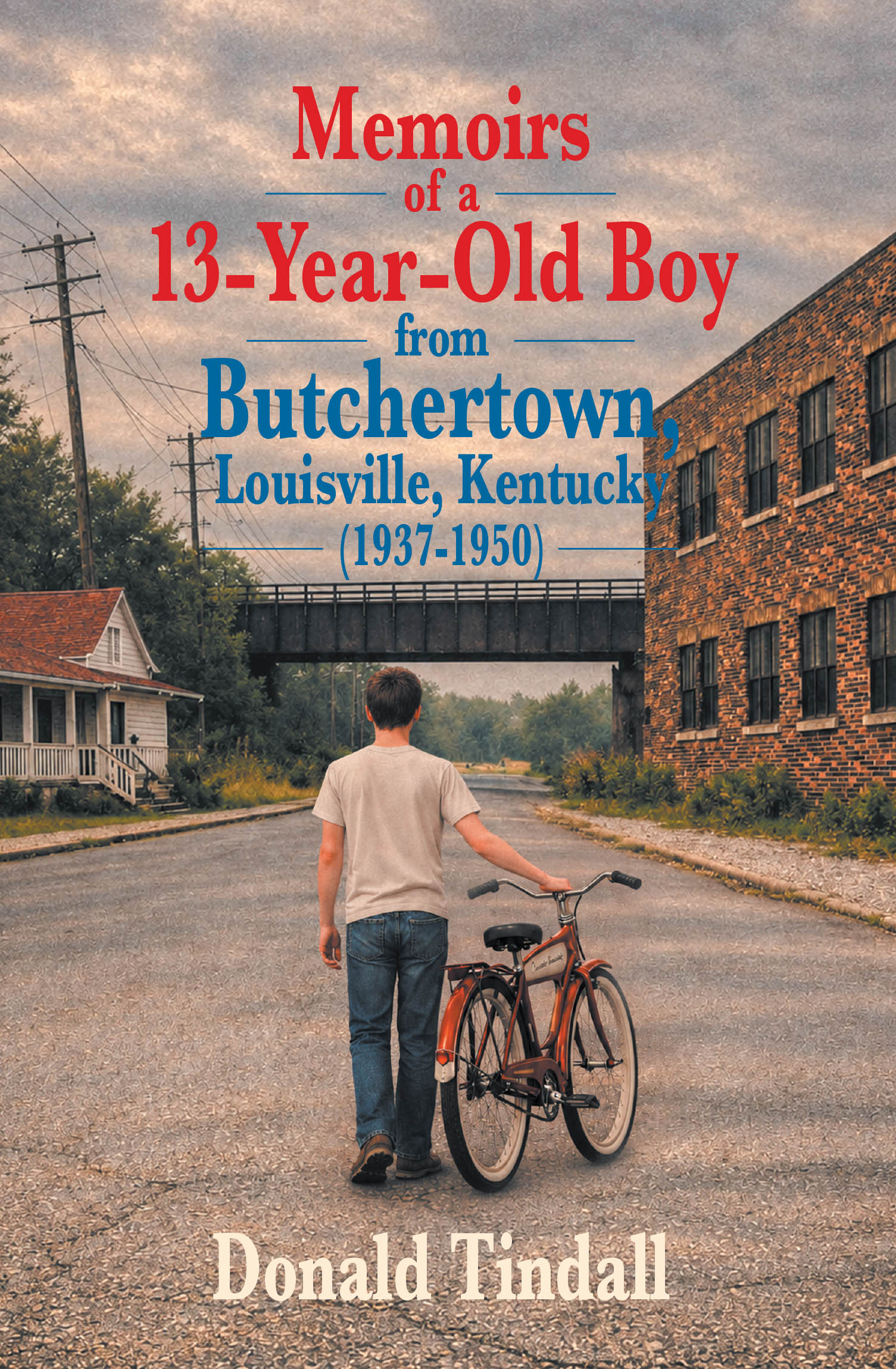
Memoirs of a 13-Year-Old Boy from Butchertown, Louisville, Kentucky 1937–1950
I believe that my family was experiencing serious financial difficulties trying to survive the maladies of the Great Depression while living among a large family on a small farm in Shelby County, Kentucky. I can only assume that our move to Louisville was a result of quiet desperation in the face of reality for Dad's family.
Dad got a job in the paint shop of the Logan Company in a strange neighborhood called Butchertown. I was a mere infant along with my two-year-old brother, Darrell, when we made our way to that diminishing but once thriving neighborhood. We ended up in a small house right across the street from the Logan Company factory.
I never learned how Butchertown became our destination, but I never questioned our place in the thrilling mix of factories, churches, large and small houses, never-ending garbage dumps, and those amazing businesses, including the Oertel Brewery, Burbon Stock Yard, Hellmueller's Bakery, grocery stores, and cafes.
I will state with confidence that Butchertown grew on me, and I grew on Butchertown. I had not seen Butchertown in its heyday as a meat processing giant, so I accepted its declining physical beauty and its dwindling prosperity as nothing out of the ordinary. I must have thought Butchertown was just getting old. I must add that the increased business activities brought on by WWII increased the level of excitement throughout Butchertown.
As the writing of my memories took me back to ancient times in this marvelous place, I recalled the pleasures of growing up as a friend of the interesting street vendors of Butchertown. Church and school were sometimes a perplexing challenge, but I survived those mysterious encounters with the aid of earthly angels who continue to dictate my thinking and actions to this day.
The story of my life must start with my mother and father. If you were to ask me about Mom's influence on my character, I would have to say, along with her unwavering love, she subtly and sometimes aggressively challenged me with every imaginable learning venture. I might not have considered her a guiding angel at the time, but I certainly know that today.
I can say that Dad was a less demanding soul. His approach to building my character was to assure that I be kind and polite to my elders, and in many subtle ways, he emphasized the importance of work to provide for family. My respect for the need to work may have become an obsession. Certainly, it became a passion that extended to all aspects of my young life.
The best example of this obsessive trait was my frequent complimentary but loving work on my uncle Lois's farm. Yes, I loved it, but I continued to look for a paying job. Collecting scrap metal from the railroad tracks and selling it at Grady Dunn's dump were my solution. When I was eleven, I got a real paying job at Jacobs Market. That was my liberation. I believe that work on the farm, my visits to Grady Dunn's dump, and experiences at Jacobs Market molded critical aspects of my character.
As if from nowhere, there was a massive floodwall in the middle of our street. Mom said we were moving to the Highlands. How good was that? I was going to live near the beautiful Cherokee Park. Well, it wasn't really the Highlands; it was Rogers Street in the Phoenix Hill neighborhood. I was a little disappointed that we didn't make it to the Highlands but more worried about starting over.
-- Donald Tindall
Buy online now!




Some retailer links may be affiliate links.