
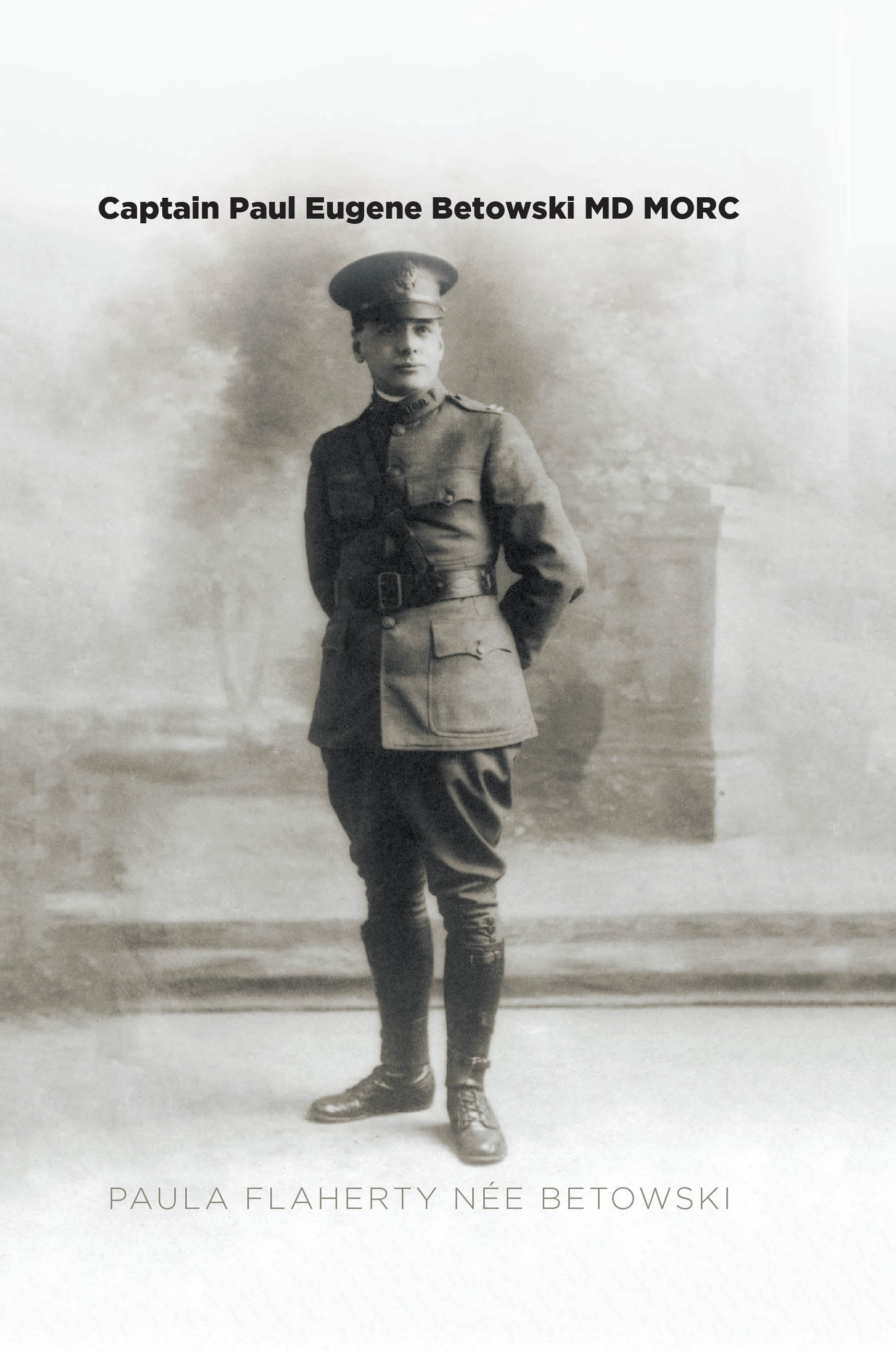
Captain Paul Eugene Betowski MD MORC
Captain Paul Eugene Betowski MD is a nonfiction WWI story told in the first person about the author's paternal great uncle. The content of the story is entirely culled from contrasting letters that Paul wrote to his brother, Leon S Betowski MD, and to his mother, Mary M Betowski. Letters to Paul's brother, the author's grandfather were more graphic, and letters to his mother inferred that he was on a lovely tour of France. The "Elmira Telegram" and the "Waverly Free Press" support details of Paul's letters.
Paul heroically saved lives of not only war wounded patients in the surgical theatre of his camp hospital, but he also saved countless Americans and Allies in the trenches by delivering gas masks and instructing soldiers how to properly use and fit these early primitive things. Paul volunteered for his final risky mission at the Western Front when HQ at the Romarantin Aerodrome intercepted a cryptic wire from Germany describing how a stealth mustard gas attack was to be conducted in the early morning hours of the following day.
Paul, is among four children of Polish immigrants, who settled in Waverly NY, in a lovely and genteel Victorian Era setting. This story begins with Paul's charming early life with his devout and aristocratic family, with whom he shares loving, affectionate bonds. Paul is a likable protagonist, whose inherent sweetness and genuine concern is evident as he seeks to heal his patients not only physically, also emotionally and spiritually through his follow up visits and warm bedside manner. Paul was lauded by his commanding officer as the "quickest surgeon at the hospital, I wish we had twenty more like him" as Paul's nimble long fingers would rapidly and skillfully perform intricate surgery on patients being carried in from the battlefield.
WWI backdrop is intense, as the "new war machines" of the "Great War" that US entered into in 1917 caused unprecedented destruction and grief in the most dastardly ways. Details are illustrated about weapons, ground and air vehicles, dogfights, conditions in the trenches, diseases, psychological and sociological post effects of war injuries, new medicine, new medical equipment and techniques that were developing as a result of WWI.
-- Paula Flaherty Nèe Betowski
Buy online now!





Some retailer links may be affiliate links.