
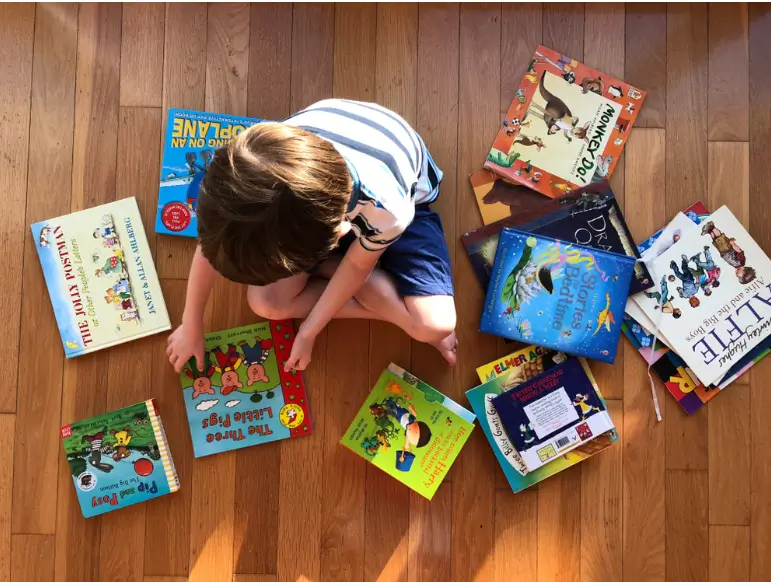
A children’s book is a work of fiction or nonfiction written specifically for a developing reader, from infants through teens. What sets children’s literature apart is not just its audience, but the deliberate choices authors make in language, structure, illustration, and theme to meet young readers at their developmental stage while helping them grow. From board books with a handful of words to young adult novels exploring complex emotions, children’s books share a common purpose: to engage, educate, and resonate with younger minds in ways that leave a lasting impression.
Children’s books are often and most obviously defined by their intended audience. If a book is written for children, it is typically categorized and promoted as a children’s book.
But the distinction of children’s literature goes much deeper than age range alone. From language and structure to emotional resonance and moral framing, children’s books are often shaped by a unique blend of storytelling techniques that meet young readers where they are while also helping them grow.
Understanding what truly defines a children’s book, from board books to young adult novels, can help authors craft stories that engage, educate, and resonate with younger audiences.
Written for a Young Reader
At its core, a children’s book is written for a developing reader. This includes a broad spectrum of ages and interests, from infants to teens.
At each stage, children have different cognitive abilities, attention spans, and emotional needs, which shape the types of books that appeal to them (and, often, to their parents as well).
Common categories by age include:
- Board books (0-3 years old): Simple concepts, few words, durable pages, and strong visual elements
- Picture books (3-7 years old): Story-driven and supported by illustrations, often 500-800 words in length
- Early readers (5-9 years old): Basic sentence structure with increasing text and fewer illustrations, designed for children starting to read on their own
- Chapter books (6-10 years old): Short chapters, simple plots, and up to 15,000 words for more confident early readers
- Middle grade fiction (8-12 years old): Full-length novels, often up to 50,000 words, with more complex themes, plots, and character development
- Young adult/YA fiction (12-18 years old): Sophisticated storytelling with deeper emotional themes, characters, and vocabulary, often up to 100,000 words in length
While age helps to determine a book’s format and complexity, the defining characteristic of children’s literature is accessibility. Stories should align with a child’s stage of development and understanding, whether they’re reading on their own or listening to a parent read a book.
Young Characters
A common rule of thumb in children’s publishing is to create main characters who are slightly older than the target reader, typically by 1-2 years. Because children are in a constant state of growth, they are often drawn to stories that reflect who they aspire to become, rather than who they are right now or where they have been.
As a result, stories that feature a main character in their childhood, adolescence, or early adulthood are frequently marketed to slightly younger audiences who see themselves in those characters’ journeys.
Language that Supports Growth
A child’s vocabulary is rapidly evolving, and children’s books are crafted with this development in mind. Effective children’s book writing balances clarity and confidence with enrichment, introducing new words and ideas without overwhelming the reader. For a step-by-step look at how to approach your manuscript, see our guide on How to Write a Great Children’s Book.
In younger categories, repetition, rhythm, and rhyme are often used to engage a child’s attention and reinforce learning. As reading levels advance, sentence structure and word choice become more complex, but clarity remains essential.
The goal is not simplification for its own sake – these books are not written beneath a child’s ability, but carefully designed to meet readers at their level, while encouraging growth.
Themes Rooted in Discovery and Growth
Just as children grow, so does their understanding of themselves and the world around them. Children’s literature supports that development by exploring themes such as:
- Identity and self-discovery
- Friendship and belonging
- Courage and resilience
- Right and wrong
- Faith, kindness, and empathy
In Christian children’s books, these themes are often grounded in biblical principles, helping young readers understand foundational truths about God, character, and purpose.
Stories may introduce faith through parables, allegory, or everyday situations, allowing children to see spiritual lessons reflected in relatable experiences.
Clear Structure and Resolution
Children’s books typically follow a more direct structure than adult literature. Stories are often linear, with a clear beginning, middle, and end.
Conflict is present but age-appropriate, and resolutions provide a sense of closure and reassurance. This structure helps young readers understand cause and effect while reinforcing emotional security through a clear resolution.
Common plot patterns in children’s literature include:
- The rule of three: The main character tries to solve their problem three times before succeeding. The stakes increase with every attempt, building suspense.
- Cumulative structure: A story that builds on itself, often using repetition and rhyme. A classic example is The House that Jack Built, dating back to the late 1800s.
- Reversal: The protagonist uses creativity to solve their problem when the expected or conventional approach fails.
- How-to or list structure: A sequence of steps or a list of facts tells a story.
Importantly, children’s stories emphasize hope, ensuring that every problem is solved before the last page is turned. For more on how language complexity affects young readers at different stages, Reading Rockets offers research-based guidance on literacy development.
Illustration as Storytelling
Illustration is a defining feature in children’s literature, particularly for younger audiences. Visual elements actively contribute to storytelling:
- Reinforce vocabulary
- Provide context clues
- Maintain connection
- Deepen emotional connection
In many cases, images and illustrations convey meaning that words alone cannot. The interplay between text and illustration is central to both the enjoyment and comprehension of children’s literature.
Imagination, Creativity, and Play
Imaginations run freely through children’s literature, inviting readers to explore possibilities beyond their everyday experiences. That might mean talking animals, faraway lands, or even a reimagining of a child’s own world.
Imaginative storytelling gives children space to ask questions, test ideas, and interact with concepts that might otherwise feel abstract. A story about a child facing a giant, for example, can serve as a safe way to explore fear, courage, and trust.
Creativity and play work hand in hand with imagination. The best children’s books often use inventive language, unexpected scenarios, humor, and playful structures to capture attention and spark curiosity. This may include rhythmic phrasing, repetition, interactive elements, or visual surprises.
In Christian children’s books, imagination and play can also serve a deeper purpose. Spiritual concepts such as faith, grace, and kindness are often introduced through stories that children can visualize and emotionally connect with. By presenting these ideas in imaginative and engaging ways, authors make them more accessible and memorable.
Ultimately, imagination, creativity, and play are essential tools in children’s literature. They invite full participation, foster joy in reading, and help stories leave a lasting impression.
Frequently Asked Questions About Children’s Books
How long should a children’s book be?
Length depends on the category. Board books are typically under 100 words, picture books range from 500 to 800 words, and chapter books can reach up to 15,000 words. Middle-grade novels run up to 50,000 words, while young adult fiction can reach 100,000 words. Matching your word count to your target age group is one of the first things publishers evaluate.
Do children’s books need illustrations to be published?
Not always, but illustrations are expected in most categories written for younger readers. Picture books, board books, and early readers rely heavily on visual storytelling. Chapter books and middle-grade novels typically use fewer or no illustrations. If you are writing a picture book, you do not need to provide finished artwork when submitting a manuscript. Publishers and authors work with illustrators separately in most cases.
Can adults write children’s books without a background in education or child development?
Yes. Many successful children’s book authors come entirely from outside education. What matters most is an understanding of your target age group: how they think, what they care about, and what language feels natural to them. Reading widely in your chosen category is one of the most effective ways to develop that understanding before you write.
What makes a children’s book Christian or faith-based?
A Christian children’s book is one where faith in God meaningfully shapes the story, not simply one that avoids inappropriate content. This might look like a character learning to trust God through a difficult experience, a story rooted in biblical values like kindness or forgiveness, or a narrative that introduces spiritual concepts through allegory or everyday situations.
Can a children’s book address difficult topics?
Yes, with care. Children’s literature has a long tradition of exploring hard themes – loss, fear, belonging, and moral failure – in age-appropriate ways. The key is resolution. Children’s books typically provide closure and reassurance, helping young readers process difficult emotions safely rather than leaving them unresolved.
What is the difference between middle-grade and young adult fiction?
Middle-grade fiction is generally written for readers aged 8 to 12, with protagonists in that same range and themes centered on identity, friendship, and belonging. Young adult fiction targets readers aged 12 to 18 and typically explores more complex emotional territory: relationships, identity, moral ambiguity, and personal transformation. Vocabulary, sentence complexity, and thematic depth all increase significantly in YA.
A Lasting Impact Beyond the Page
Children’s books are often a young reader’s first encounter with storytelling. As a result, they carry both a unique responsibility and a meaningful opportunity to shape a child’s imagination, values, and worldview.
Whether introducing letters, life lessons, or faith, the most effective children’s books support growth while entertaining young minds. Just as importantly, they create moments of connection between the child, the story, and the person sharing it with them.
Ready to Share Your Story?
If you have a children’s book manuscript that reflects your faith and your calling, Christian Faith Publishing works with authors to bring those stories to young readers. Explore what it means to work with Christian Faith Publishing and take the next step toward sharing your message with the families who need it most.